Victims of forced displacement face significant obstacles in accessing the protection guaranteed to them under international law.
In addition to frequent delays in obtaining protection documents, many refugees encounter language barriers and lack the information needed to communicate their situations effectively during administrative procedures. As a result, individuals who qualify for refugee status are often unable to secure it, forcing them into irregular situations and, in many cases, to experience homelessness. This not only deepens their hardship but also exposes them to heightened risks and vulnerabilities.
To address these challenges, the Umbrella Refugee Committee—an initiative led by, with, and for people affected by forced displacement—established the Mobile Teams.
What are our Mobile Teams?
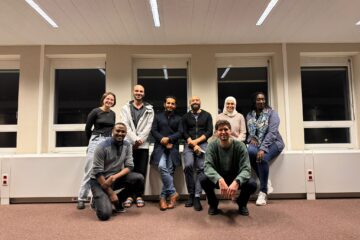
Mobile Teams are coordinated groups of refugee volunteers who serve as focal points and facilitators for outreach activities, providing protection to victims of forced displacement of all nationalities.
With and for
refugees:
The fruit of
self-resiliance
Our Mobile Teams’ volunteers are refugees themselves coming from different countries, such as Afghanistan, Burundi, DR of Congo, Eritrea, Pakistan, Rwanda, Syria, or Ukraine.
Therefore, our teams not only assist others in their native languages but are also the best ones to deeply understand and empathise with other refugees’ situations.
Our teams receive specialised training sessions by UNHCR, Vluchtelingenwerk Vlaanderen, and other organizations to strengthen their impact.
Trained
teams
What are our Mobile Teams doing?
1
Emergency assistance
in native languages
2
Provision of information
on asylum system
3
Referrals to health
and social services
4
Data
collection
Our Mobile Teams reach out to vulnerable communities on a regular basis. The volunteers listen to them and gather data on their situations and needs. The Umbrella Refugee Committee subsequently issues reports on the collected information to better guide our operational priorities.
Serving as key intermediaries between refugees, instiutions and local service providers, our facilitators provide refugees with information on asylum and reception systems, share sucessful administrative experiences, and refer communities to local healthcare and social services for inclusion. To tackle language barriers, Mobile Teams also help refugees in their administrative procedures by serving as translators.
We want to create meaningful connections et ensure ongoing support. With this aim, our Mobile Teams add the vulnerable refugees in instant messaging platforms. By this, we do not only share events et informative sessions but also become immediate emergency assistance structures; if refugees in the street need something, our teams are ready to help.

Recent examples
During the COVID-19 pandemic, our Mobile Teams collaborated closely with governmental and civil society organizations. For instance, team members volunteered with Médecins Sans Frontières Belgique (MSFB) mobile clinics, providing health and translation support, and assisted municipal authorities in producing masks.
Another recent example of our Mobile Teams active engagement with homeless refugees was an informative session on homelessness hosted on May 2nd, 2024, were more than 100 refugees and asylum seekers came to our refugee Community Centre to listen to the advices of the Umbrella Refugee Committee, and to share their doubts and concerns.
Lately, our Mobile Teams have been collecting data on the situations of refugees experiencing homelessness to produce evidence-based solutions and support the government’s response.
Our Mobile Teams’ dedication to
protecting others
is the true essence of
solidarity, brotherhood et self-reliance.


 French
  English
1 commentaire
downloader youtube online · 5 septembre 2024 à 11:31 pm
Thank you for sharing this insightful article! I found the information really useful and thought-provoking. Your writing style is engaging, and it made the topic much easier to understand. Looking forward to reading more of your posts!